1874–1879
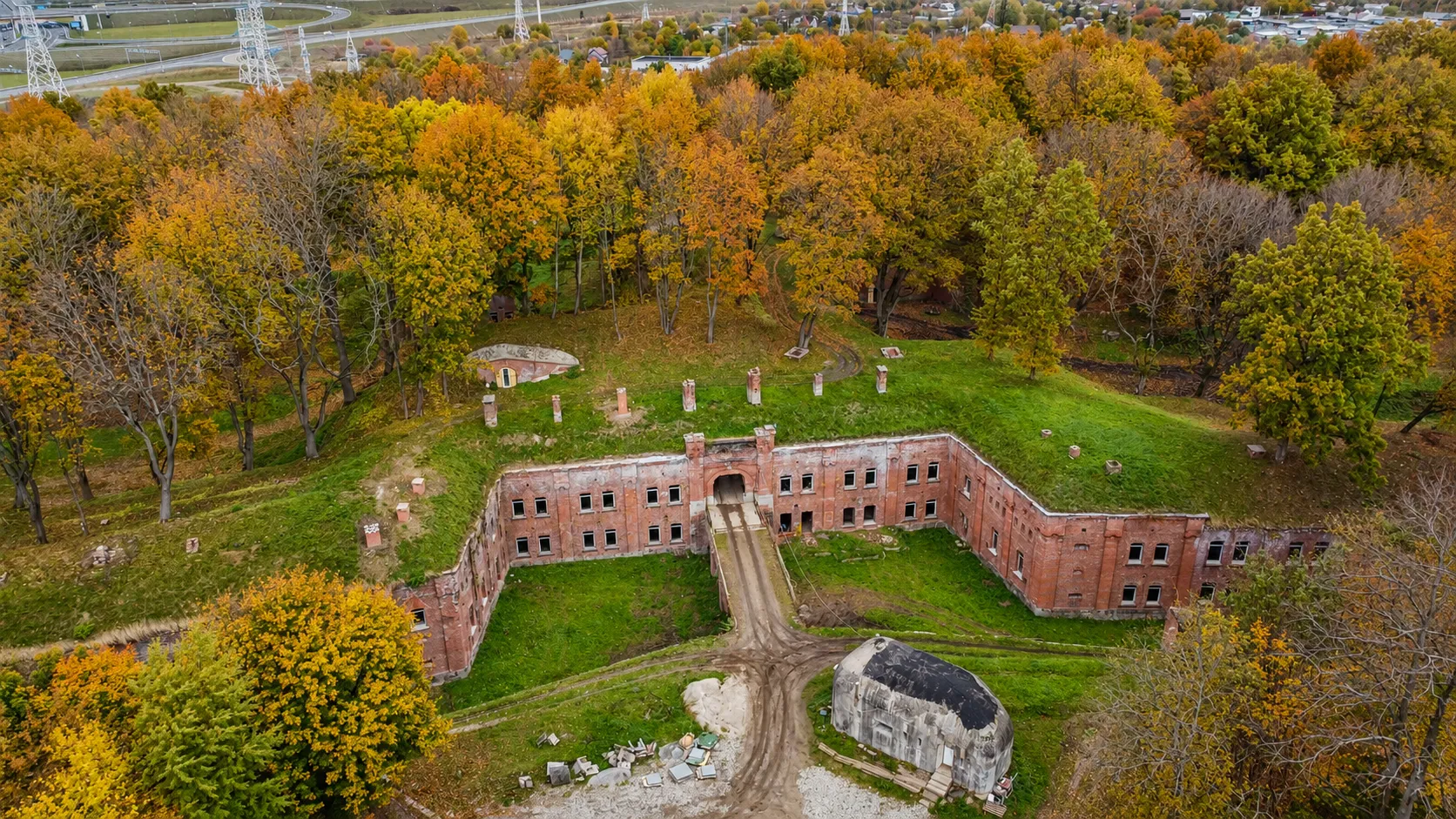
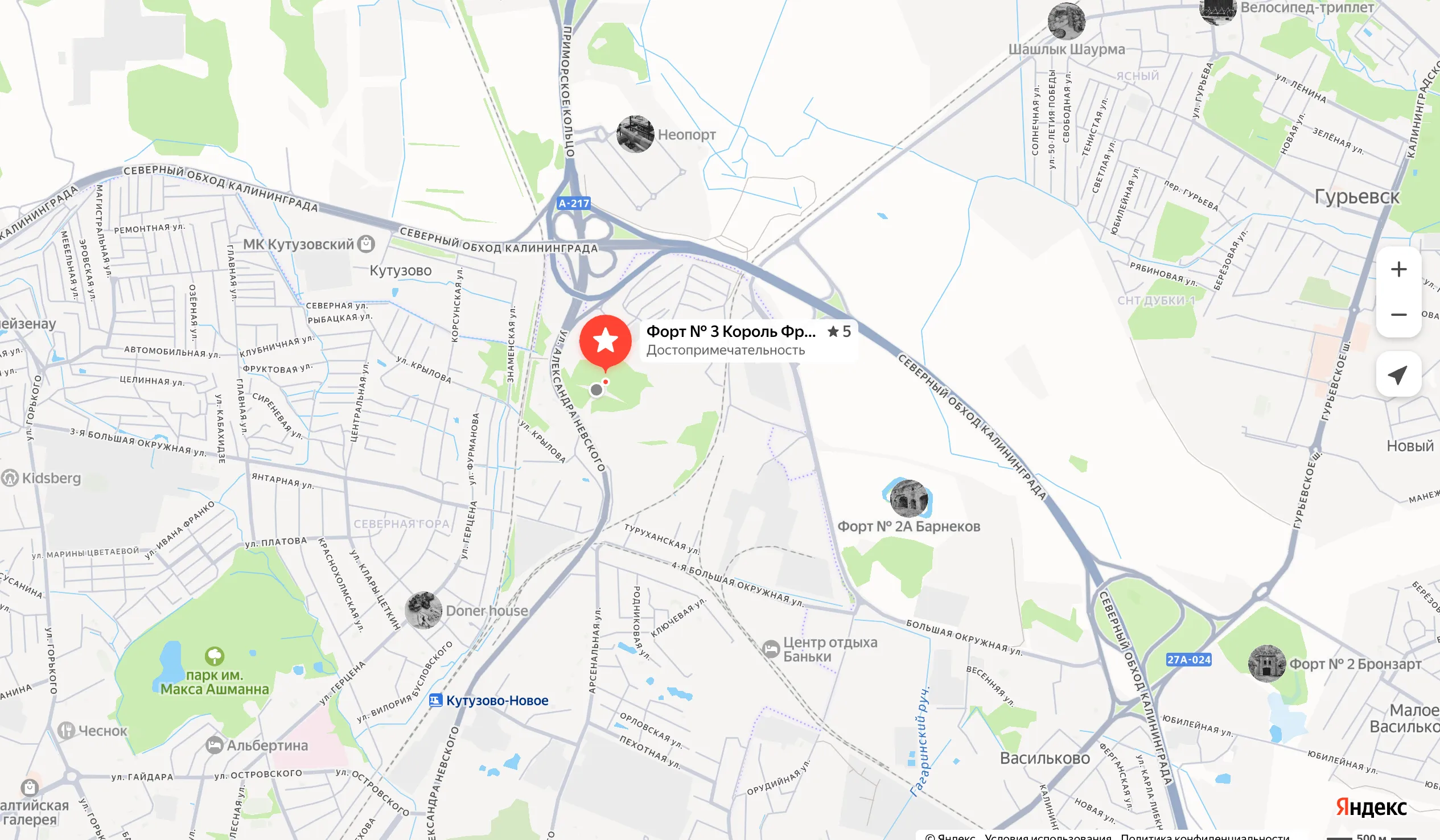
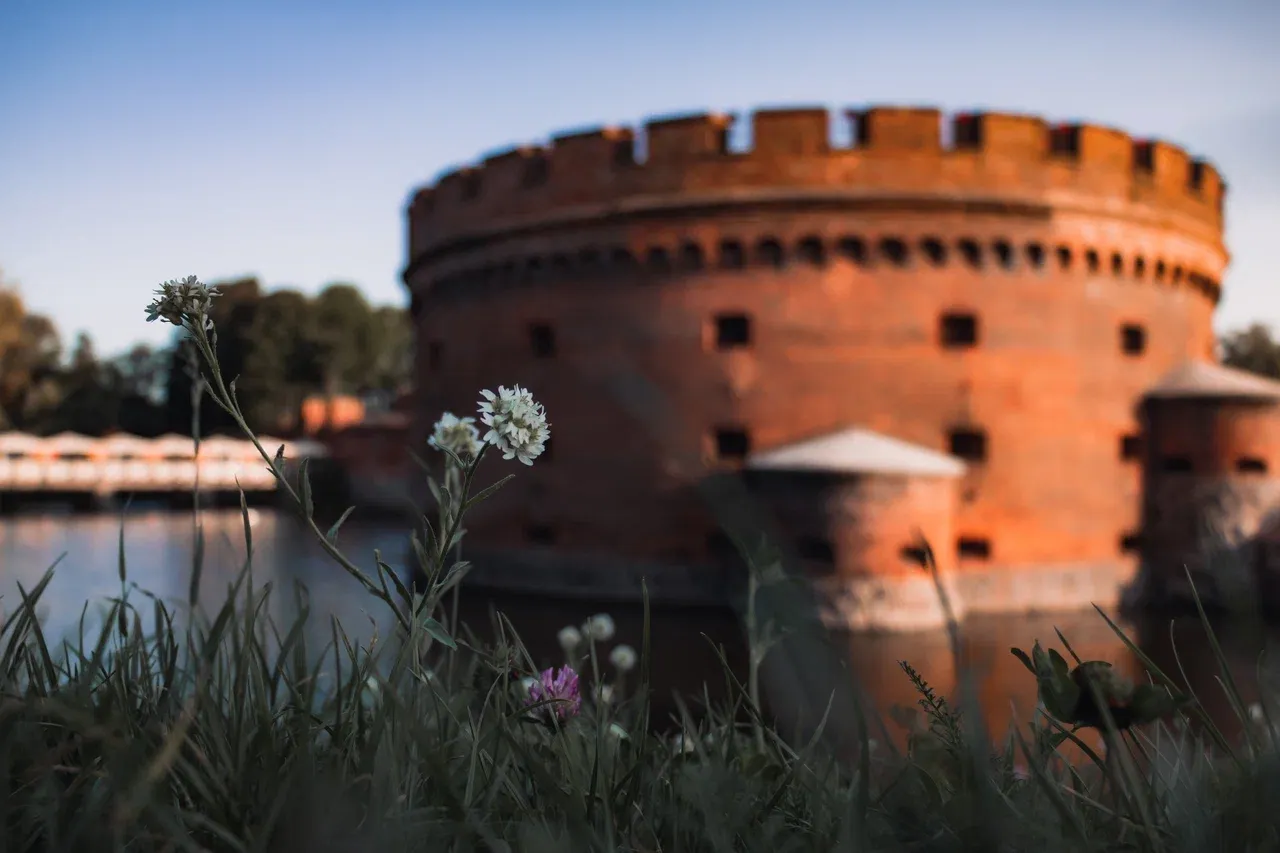
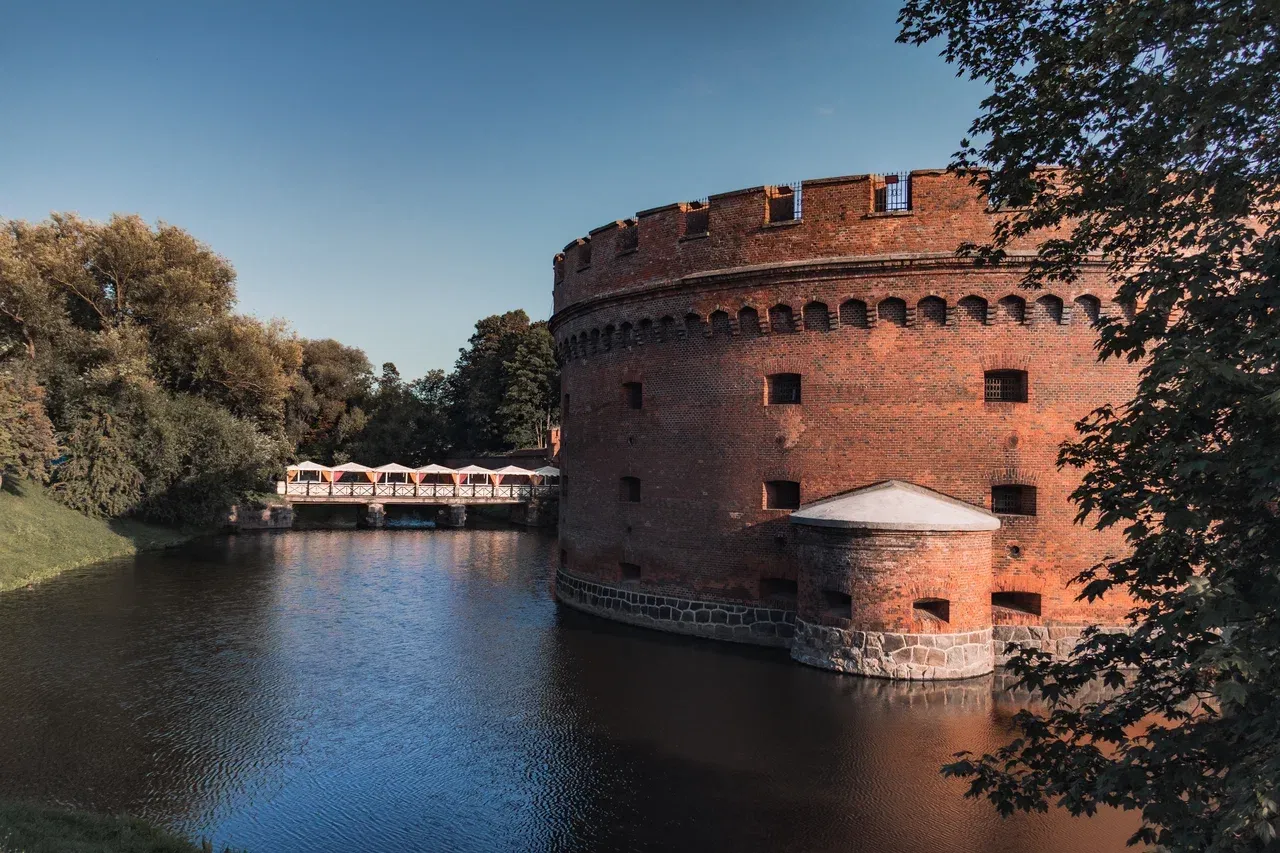
Fort No. 3 was the first built in the ring of forts surrounding Konigsberg. Construction took place on Quednau Hill, the highest point in what is now Kaliningrad.
8 minutes from Usadba
20 minutes from central Kaliningrad
20 minutes by car from Fishing Village
Kaliningrad has a remarkable history stretching back to 1255. Exploring every landmark and historic corner of the city and region would take hundreds, perhaps thousands, of hours. If you have less time but want to discover the extraordinary heritage of Russia's westernmost region, this page introduces Fort No. 3, King Friedrich III.
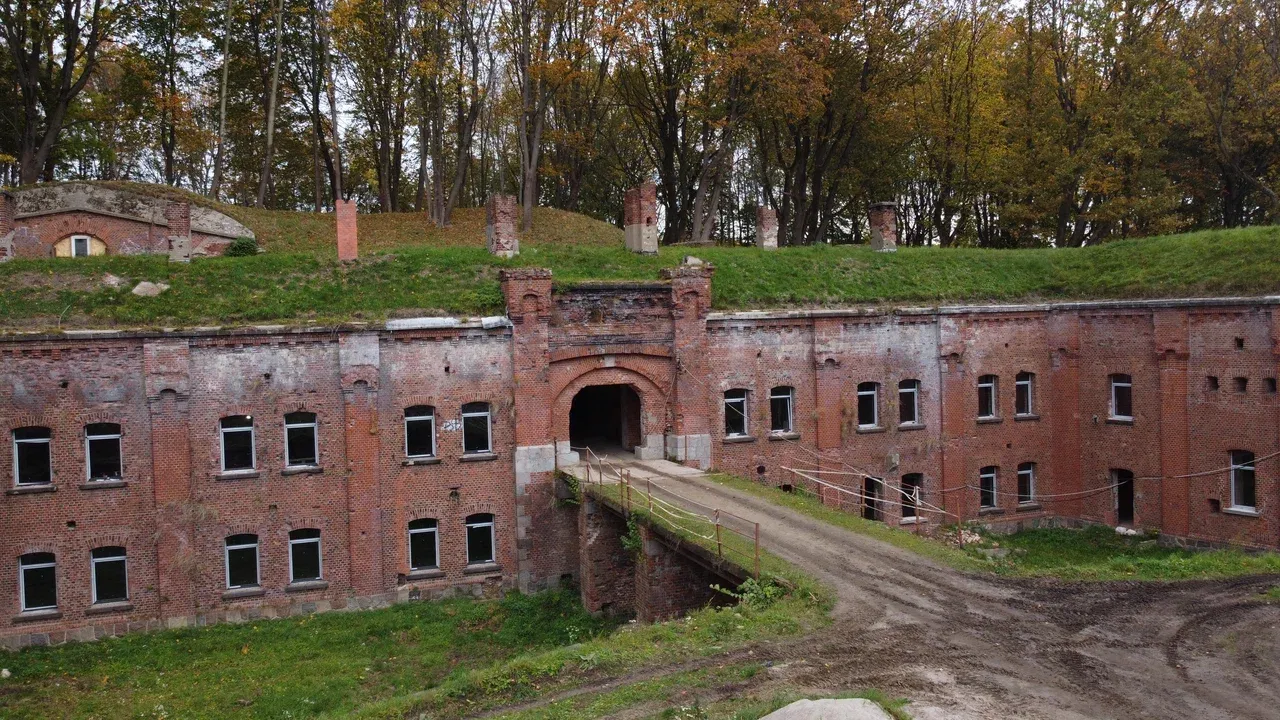
Photo 1 of 2
Fort No. 3 was the first built in the ring of forts surrounding Konigsberg. Construction took place on Quednau Hill, the highest point in what is now Kaliningrad.
Originally called Quednau, the fort was later named after the soldier king, Friedrich Wilhelm I. In 1894, it received its final name, Fort No. 3, King Friedrich III, which it retains today.
The first attempt to take the fort in January was repelled by German forces. On 8 April 1945, soldiers of the 557th Rifle Regiment captured it after a day of resistance. The fort sustained only minor damage.
Fort No. 3 became a regional cultural heritage site. Today, it is the oldest, largest and best-preserved of Konigsberg's forts.
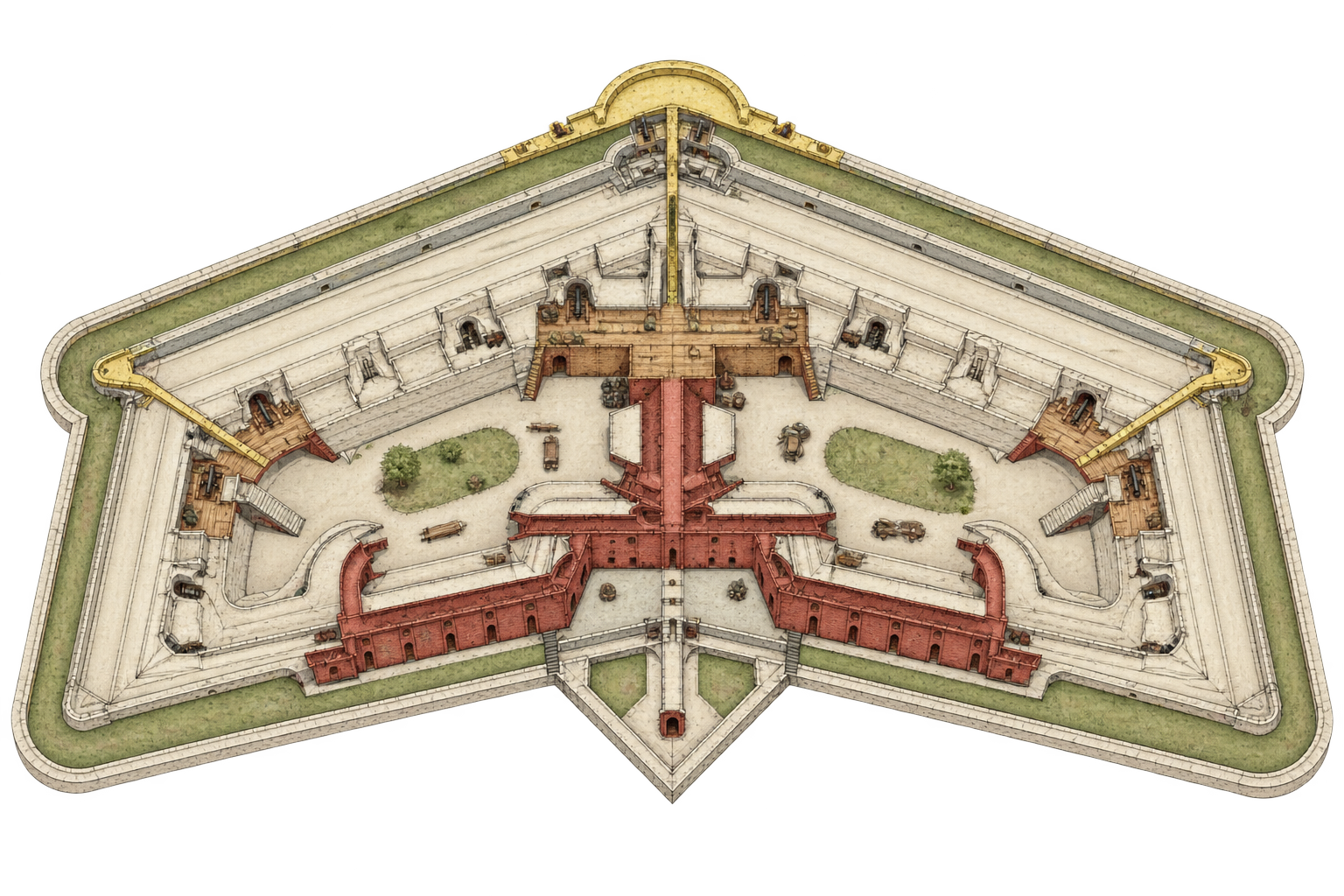
The fort is a horizontally elongated hexagon covering 6,096.8 square metres, surrounded by a dry moat.
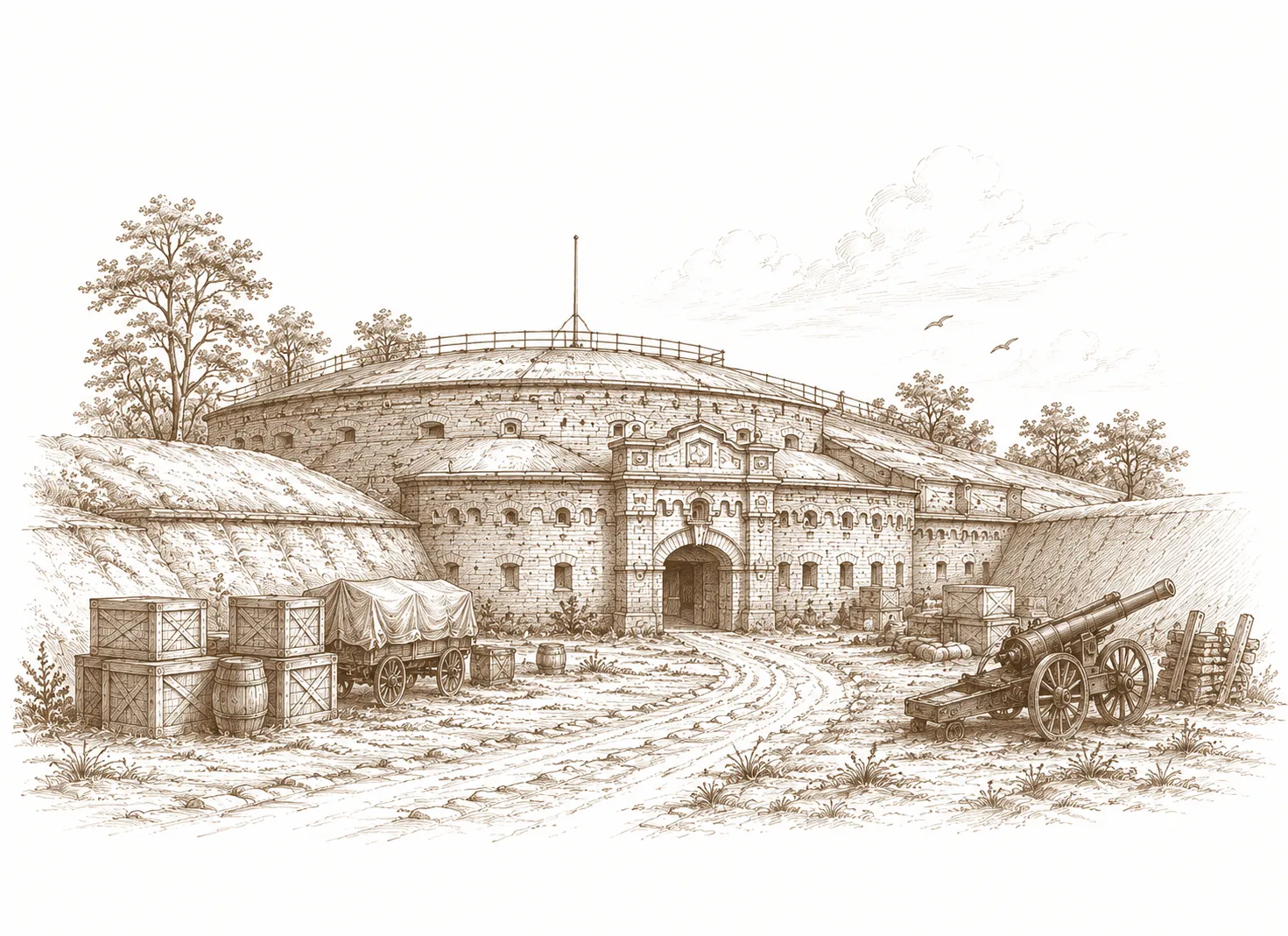
During the First World War, the fort was not a strategic site and did not
take part in combat. After the Treaty of Versailles was signed
and the war ended, disarmament work saw all of the fort's
guns removed, and it was used as a warehouse.
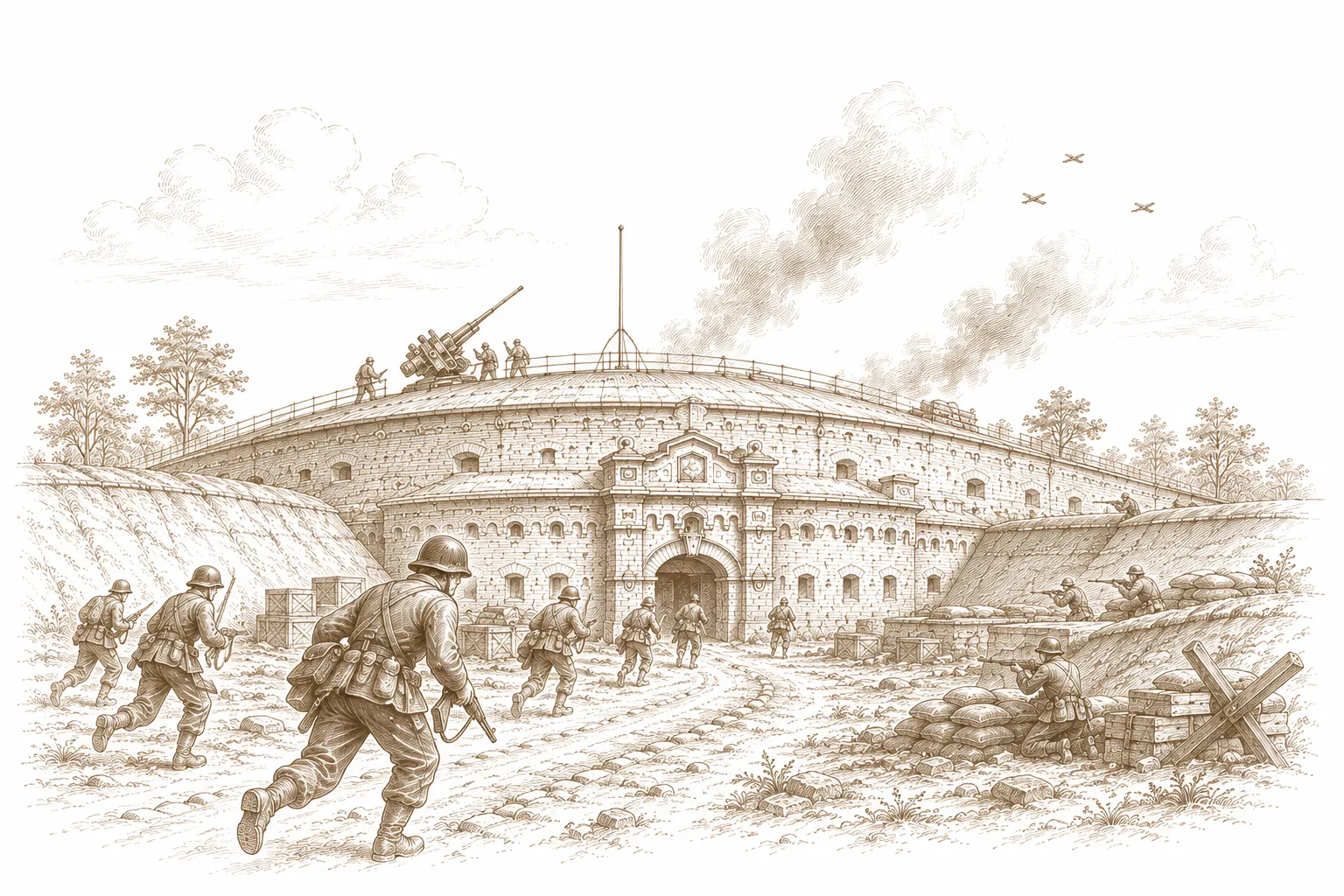
Fort No. 3 was stormed during the Second World War. The first attempt came in January 1945, when Red Army troops tried to reach Rothenstein Station, now Kutuzovo. German forces deployed anti-aircraft guns and repelled the attack. On 8 April 1945, soldiers of the 557th Rifle Regiment captured the fort after a full day of resistance. More than 120 German soldiers and the fortress commandant surrendered. The fort suffered only minor damage.
In 2007, Fort No. 3 became a regional cultural heritage site. AgeevGroup leased the fort in 2016.
A key priority is preserving the fort's historic appearance and distinctive architecture. Restoration must respect its status as a cultural heritage monument.
Plans for the fort include improving the surrounding grounds and creating a comfortable, engaging space for visitors.
Restoration work is planned to preserve the structure and adapt it for future use while retaining its historic value and distinctive fortification architecture.
The fort is intended to develop as a visitor attraction. Its history, architecture and surviving layout offer an engaging introduction to Konigsberg's fortification heritage.
Address
Opening hours
8 minutes from Usadba
20 minutes from central Kaliningrad
We have gathered our favourite regional sights and personal recommendations for you. Come and experience the atmosphere for yourself, and discover your own Kaliningrad Usadba.
Kaliningrad Region,
8 and 8A Zarechnaya Street, 8 Rucheyny Lane, Orlovka, Guryevsk District
Phone
+7 (4012) 38–48–50Opening hours
Open 24 hoursCheck-in time
15:00Check-out time
12:00Events for up to 40 guests
+7 (4012) 38–48–50Events for 40 guests or more
+7 (4012) 38–57–97Opening hours
11:00 – 20:00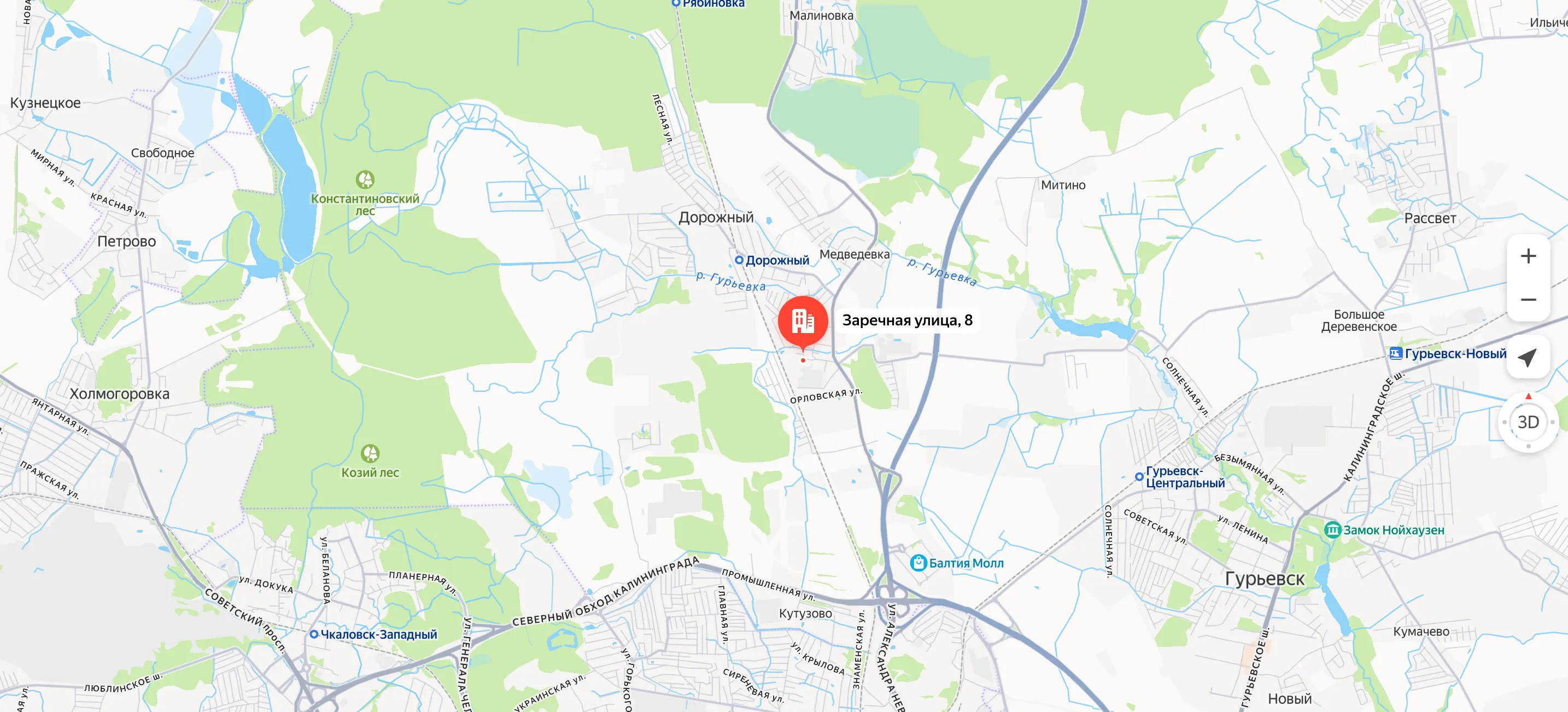

a culinary event
Bring your loved ones to Usadba and spend the day around a generous table, enjoying favourite dishes, traditional festivities and good company.
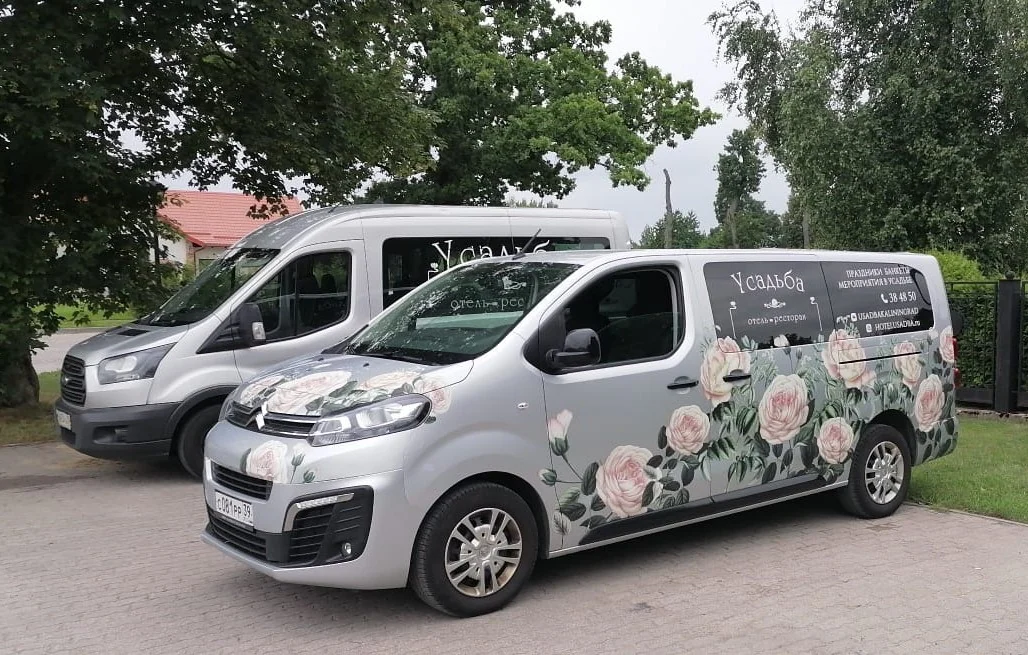
COMPLIMENTARY TRANSFER
Guests of Usadba Park Hotel can enjoy a complimentary transfer to central Kaliningrad and back. Minibuses seat up to 8 guests.
Departure from Usadba
Daily at 9:15 and 10:00
Departure from the park hotel reception
Final stop: the Amber Museum.
Return to Usadba
Daily at around 19:00
Departure from 2 Marshal Vasilevsky Square
(Dona Hotel car park).